I recently completed a few sewing projects &
took them over to my daughter's home to
photograph them on my granddaughter, Ms. C.

I couldn't resist capturing a few shots
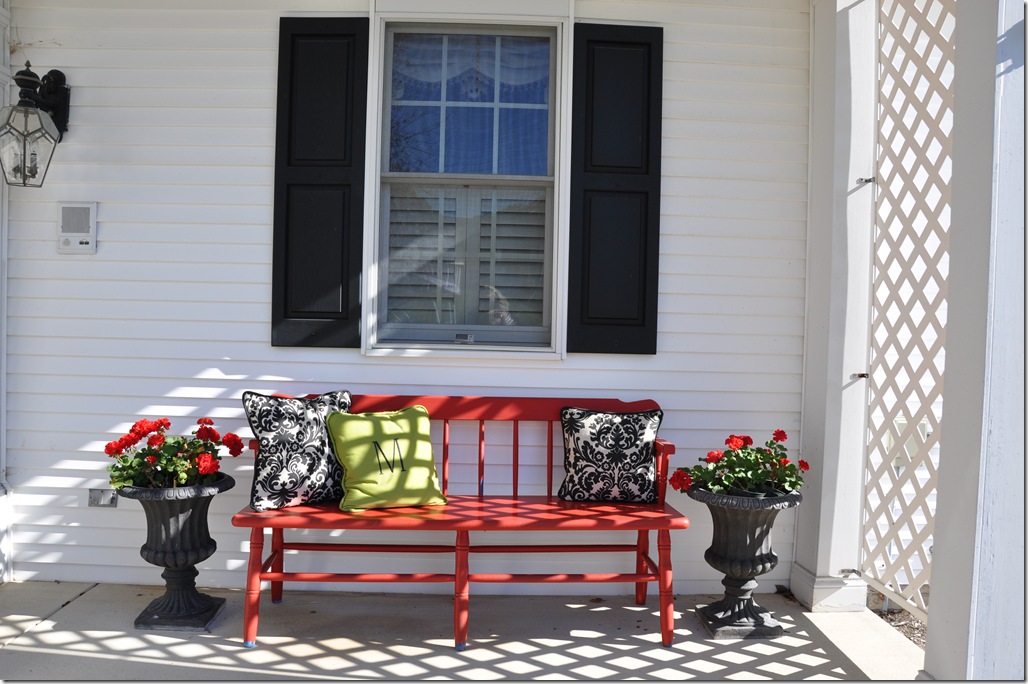
of her on their front porch with all the
pretty autumn decorations, too.

This machine embroidered sweatshirt, below,
turned out to be too big on Ms. C.
even though I cut off the bottom ribbing &
added the shorter ruffle & trims.
I'm tucking it away for next year.
Here she is, modeling it.

I've decided not to show her face on my blog anymore.
Makes me sad but there are just too many creeps out there &
photographs, even with "right click disabled"
(which I have NOT been able to figure out how to do!)
can still be stolen.
Especially since I just learned that one of the sponsors of a popular
machine embroidery site has been running pornography sites
in his secret access back rooms!
I don't want her picture to end up on some slime-ball's
ceiling or a prison wall someplace.
Back to the sewing....the little knit dress, below, was an experiment with knits.

I took a vintage Kwik Sew tee-shirt pattern, (#307) &
cut off the pattern about 4" below the armpits.
I then gathered & serged a full width of fabric onto the bottom for the skirt.
Black interlock knit was used to finish the neckline & sleeves.
The black grosgrain ribbon is sewn into the side seams &
topstitched across the front only,
(per my sewing mentor, Carol's suggestion)
so that the back of the dress still had some stretch to it.
The bow is sewn together but then pinned on from the inside
with just a safety pin so it can be removed for laundry.
The ends of the ribbon were heat sealed with a flame to prevent fraying.

She loves this dress as it is very soft & comfy.
She is able to move freely in it & immediately started in with the cartwheels & splits.
She is going to be a cheerleader, I just know it!
This last little project is another attempt to master the "Cotton Theory" of quilting.
It is the first project in Betty Cotton's first book...a simple trivet.
It took me ALL AFTERNOON!!!!!!
Double batting is used inside the first square for insulation &
each section around it has its own separate section of batting,
cut 1" smaller all around than the top fabric.
Reverse side:
You use a 1" seam allowance & fold the sections over themselves to make
flanges & topstitch with decorative stitches to finish the quilting.
I must say, I'm not thrilled with the method &
I can't see myself doing an entire quilt this way
but I'm glad I finally figured out how to do it!
Thanks for stopping by the Gazebo House!
I'll have more autumn photos to share soon.

I missed the colors of this season so much when we lived in FL
that I want to capture & hold them forever.
fondly,